
First Time in a Hostel? Safety, Etiquette & Packing (2026)
🏨 Budget Accommodation Quick Overview
Top Stays & Quick Breakdown
Full Accommodation Guide
Disclosure: Some links in this article may be affiliate links. If you book through them, we may earn a commission at no extra cost to you.
---
Quick Answer (TL;DR)
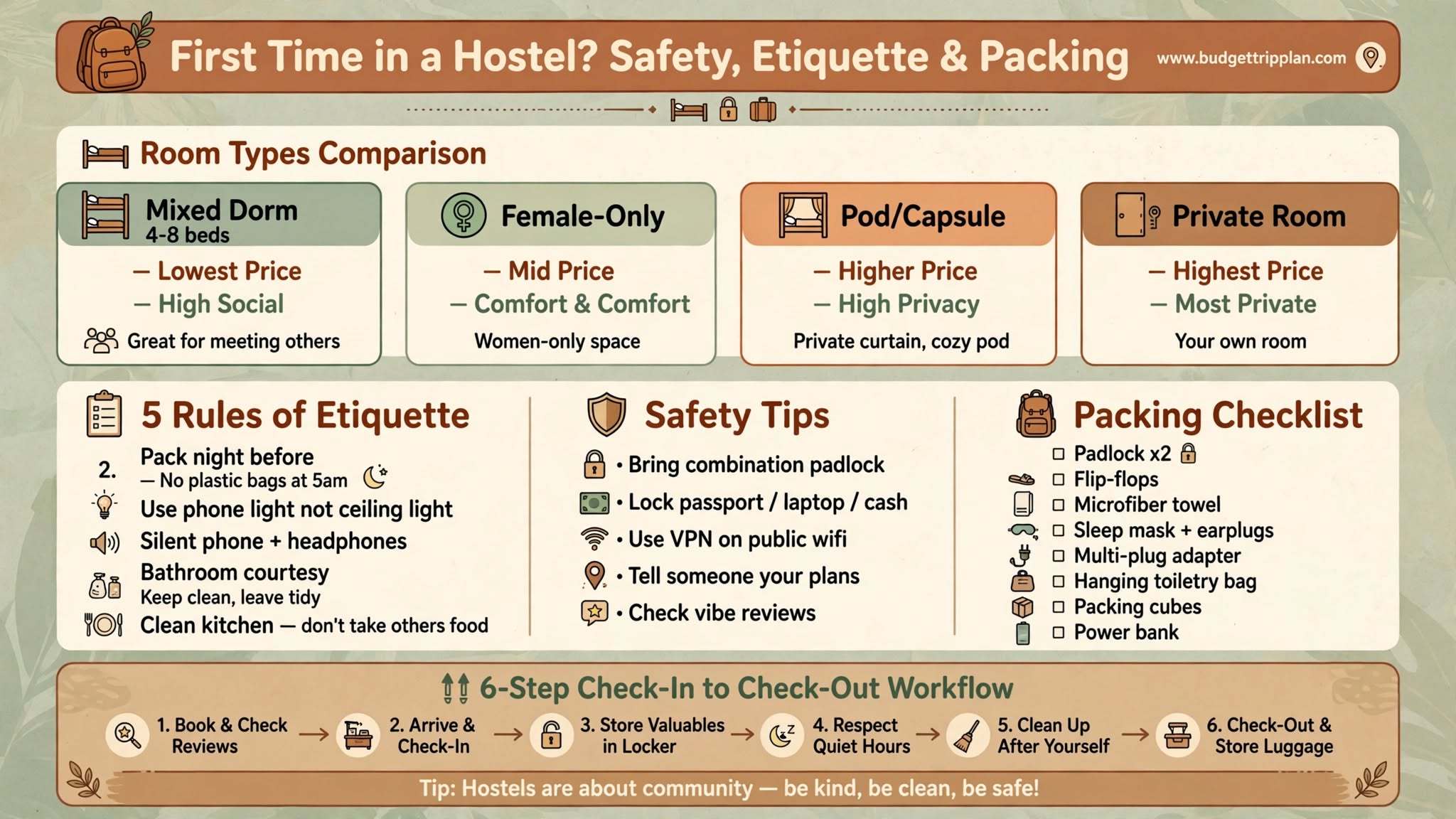
Staying in a hostel for the first time is one of the most affordable ways to travel and meet people. To make it smooth: bring your own padlock, wear flip-flops in shared showers, pack the night before using fabric packing cubes instead of crinkly plastic bags, follow the hostel's quiet hours (many dorms expect lights out around midnight, but rules vary, so ask at check-in), and lock your valuables away every time you leave the room.
---
Quick Comparison: Hostel Room Types at a Glance
| Room Type | Privacy Level | Social Vibe | Best Used For | Typical Price Level |
|---|---|---|---|---|
| Mixed Dorm (4–8 Beds) | Low to Moderate | High | Budget solo travelers looking to make friends | Lowest |
| Female-Only Dorm | Moderate | High | Solo female travelers who want extra comfort | Low |
| Pod / Capsule Bed | High (Curtains/Walls) | Moderate | Travelers wanting privacy inside a shared room | Low to Mid |
| Private Hostel Room | Very High | High (Communal Areas) | Couples or travelers wanting hotel-style privacy plus social perks | Highest |
Note: Prices vary by destination, season, and hostel. Compare current rates for your dates on Hostelworld and Booking.com before you book.
---
1. Essential Hostel Etiquette: How Not to Be "That Guest"
Sharing a room with several strangers requires basic courtesy. These simple unwritten rules will earn you respect from fellow travelers:
A. The "Plastic Bag" Rule & Early Packing
Nothing annoys dorm mates more than crinkling plastic bags at 5:00 AM.
B. Lighting Etiquette
Turning on the main ceiling light while people are sleeping is a major hostel faux pas.
C. Phone Calls & Audio
D. Bathroom Courtesy
E. Kitchen and Other People's Stuff
---
2. Hostel Safety & Security: Protecting Yourself & Your Gear
Hostels are social and generally welcoming places, but a few basic precautions give you peace of mind throughout your trip.
A. Always Lock Up Your Valuables
Most hostels provide personal lockers or under-bed storage, but many expect you to bring your own lock.
B. Digital & Financial Safety
C. Personal Safety for Solo Travelers
---
3. The First-Timer Hostel Packing List
Hostels call for a few items you would not normally pack for a hotel stay:
🎒 Essential Gear Checklist
Also bring your booking confirmation and a form of ID. Some hostels ask for ID or a deposit at check-in.
---
4. How to Choose the Right Room Type for Your First Stay
If you are nervous about your first hostel experience, picking the right room layout makes a big difference:
Not sure where to book? Our Hostelworld vs Booking.com comparison breaks down how the two platforms differ for hostel stays.
---
5. Our First-Timer Checklist: Check-In to Check-Out
Follow this step-by-step routine when you arrive at your first hostel:
1. Step 1 (Before You Arrive): Confirm the hostel's reception hours. Not every hostel has 24-hour reception, so tell them your estimated arrival time if you will check in late.
2. Step 2 (Check-In): Show your booking confirmation, then get your room key or card, bed number, and locker location. Ask about kitchen rules, quiet hours, and social events.
3. Step 3 (Claim Your Bed): Find your assigned bunk. If beds are unassigned, a bottom bunk near a power outlet is easier to get in and out of.
4. Step 4 (Set Up Your Locker): Place your passport, extra money, and electronics inside the locker right away and secure it with your padlock.
5. Step 5 (Explore Common Areas): Head to the kitchen, lounge, or rooftop. A simple "Hi, where are you from?" is the easiest way to make travel friends.
6. Step 6 (Check-Out): Strip your bed if the hostel asks you to, return your key or card, and collect any deposit. Check the kitchen and fridge for any food you left behind.
---
6. Common Pitfalls to Avoid
---
Frequently Asked Questions (FAQ)
Are hostels safe for solo female travelers?
Hostels are a popular choice for solo travelers, including women, but safety varies by property. Read recent reviews, check how lockers and room access work, and consider a female-only dorm if it makes you more comfortable. Let staff know if anything feels off.
Do hostels provide bed sheets and pillows?
Most hostels provide bedding, but policies differ. Some charge a small fee or ask you to bring your own. Check the facilities section of the hostel's listing before you book.
Do I need to bring a towel to a hostel?
It depends on the hostel. Some include towels, some rent them, and some do not offer them. Check the listing, and pack a quick-dry microfiber towel if you are unsure.
What time is quiet time in a hostel?
It varies. Many dorms expect lights out around midnight, and some hostels post official quiet hours. Ask at check-in, and keep noise low in the room whatever the time.
How do I make friends if I am quiet or introverted?
Join hostel activities such as family dinners, walking tours, or pub crawls, or simply spend time in the common lounge or kitchen. Introducing yourself to your dorm mates when you arrive also breaks the ice early.
What should I do if a dorm mate is snoring loudly?
Use earplugs or noise-canceling earbuds with white noise. If someone is disruptive outside quiet hours, let the front desk know.
---
Final Verdict
Your first hostel stay does not have to be overwhelming. Respect shared spaces, keep your belongings locked up, and pack a few essentials like flip-flops, earplugs, and a padlock, and you can enjoy an affordable, social, and memorable trip.
Next step: Pick a well-reviewed hostel on Hostelworld, filter for pod or curtained dorm beds, and start packing your essential gear!
Related reading: Hostelworld vs Booking.com: Which Is Better? (2026) | How to Track Hotel Price Drops and Rebook for Less (2026) | Hidden Hotel Fees: Resort Fees, City Taxes & Deposits (2026)
---